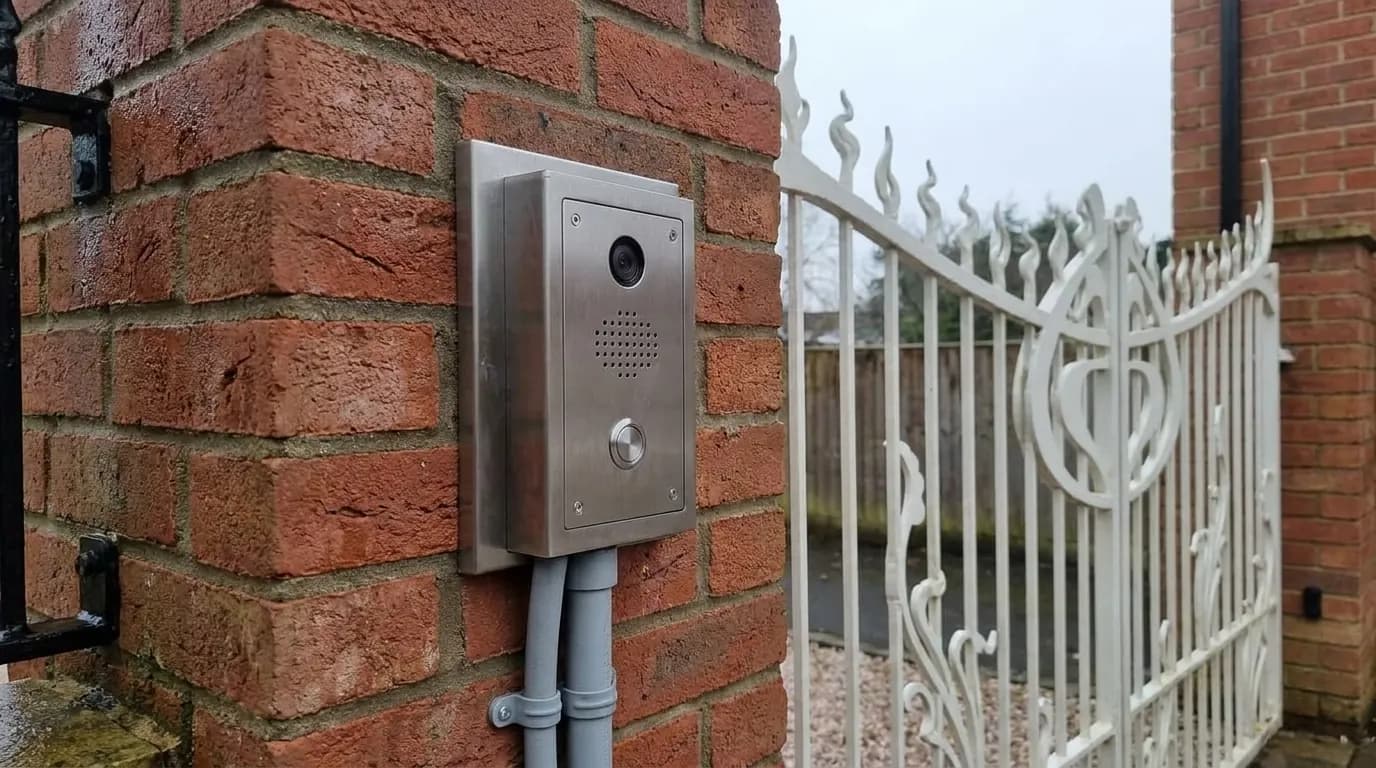
What is a gate intercom?
A gate intercom is a two way speech system between the gate and wherever you answer it, wired so that answering also lets you release the gate. The panel at the gate holds a call button, a speaker and a microphone, and on a video system a camera as well. The answering point can be a handset or screen inside the house, or a phone, depending on the system.
What is the difference between an audio and a video intercom?
An audio intercom carries voice only. A video intercom adds a camera in the gate panel so you can see who is calling before you release the gate, which matters most where the gate is out of sight of the house or where deliveries are frequent. Video panels need more cable capacity or a wireless link, and they cost more, so the choice usually comes down to whether seeing the caller changes what you would do.
Can an intercom be added to gates that are already automated?
Usually yes. The two things that decide it are whether the existing control board has a spare input to take the entry release signal, and whether there is a usable route for the cable from the gate to wherever you want to answer. Both are checked on site. Adding an intercom to a working installation is far less work than it sounds, because the gate, the drive and the power are already in place.
Do I need to run a cable from the gate to the house?
Not necessarily. A wired handset or screen inside the house is the traditional arrangement and it is very reliable, but it needs a cable route, which on a long or already surfaced driveway can be the biggest part of the job. Systems that call a phone instead need no cable to the house at all, which is often the deciding factor on rural entrances and long drives.
Can the intercom call my mobile?
On systems designed for it, yes. The panel at the gate dials a number when the call button is pressed, you speak to the caller and release the gate from the handset, so it works whether you are inside, in the garden or away from the property entirely. It is the usual answer where the gate is far from the house or where nobody is reliably indoors to answer a fixed handset.
Where should the intercom panel go?
At driver height on the approach side of the gate, close enough that a driver can reach it without getting out, and positioned so that driving rain does not sit on the call button or the camera lens. A pillar or a dedicated post both work. On a video system the panel also needs to face a direction where the caller is not permanently backlit, or the picture is unusable at the times of day you most want it.
Will the intercom still work in a power cut?
Not unless it has its own backup supply, because the panel, the answering point and the gate drive all need power. That is a separate question from getting through the gate: every automatic gate has a manual release that disengages the drive so the gate can be pushed by hand, and anyone who uses the gate regularly should know where it is and how to work it.
Can more than one person answer the gate?
On most systems yes, either through additional handsets or screens inside the property, or by the panel calling more than one number in turn. Where a property has more than one occupied building, or where the person who answers is not always the same, that is worth settling at the start, because it affects which type of system suits and how it is wired.
Can an intercom be fitted to a pedestrian gate as well?
Yes, and it is often simpler than a driveway gate because there is no drive motor involved. A pedestrian gate typically takes an electric lock release rather than a motor, and the intercom triggers the release. Where a property has both a vehicle gate and a separate pedestrian gate, the two are usually best set up so that the same answering point covers them both.
Do intercoms cope with British weather?
Outdoor rated panels do, provided they are installed for it. The failure point is almost never the panel body, it is the cable entry: an entry sealed from above will let water track down the cable and into the electronics. Sealing from below, using the correct glands and siting the panel out of the worst of the driving rain is what makes the difference between a panel that lasts and one that does not.
What goes wrong with intercoms?
Most faults are water ingress, a corroded or loose connection, or a fault on the cable run rather than the panel itself. On video systems a lens obscured by dirt or condensation is common and looks like a failure when it is not. Where a panel genuinely has failed it can normally be replaced without touching the gate, the drive or the buried cabling.
Can you repair an intercom fitted by someone else?
Yes. Intercom repair is not tied to whoever installed it, and the first step is establishing whether the fault is the panel, the answering point, the cable between them or the connection to the gate control board. Those are four different jobs at four different costs, which is why the diagnosis happens on site rather than over the phone.